
How The Battle of Bannockburn Lives On Through Craft and Design
The Battle of Bannockburn is more than a defining moment in Scottish history; it is a story of resilience, leadership and identity that continues to resonate centuries later. While the event itself took place in 1314, its legacy has never stood still. Instead, it has evolved, finding new life through storytelling, creativity and craft.
Today, history is no longer confined to the pages of books or the walls of museums. Through thoughtful design and skilled crafting, the spirit of Bannockburn can be experienced in a tangible, meaningful way.
A story that refuses to fade
What gives the Battle of Bannockburn its enduring power is not simply the outcome, but what it represents. It is a story of determination against overwhelming odds, of strategic brilliance, and of a nation defining its place in the world.
These themes remain relevant today. Leadership, courage and conviction are timeless qualities, and Bannockburn continues to symbolise them. Yet, for history to remain alive, it must be retold in ways that connect with each new generation. This is where design and craftsmanship step in, transforming historical narrative into something that can be seen, held and experienced.
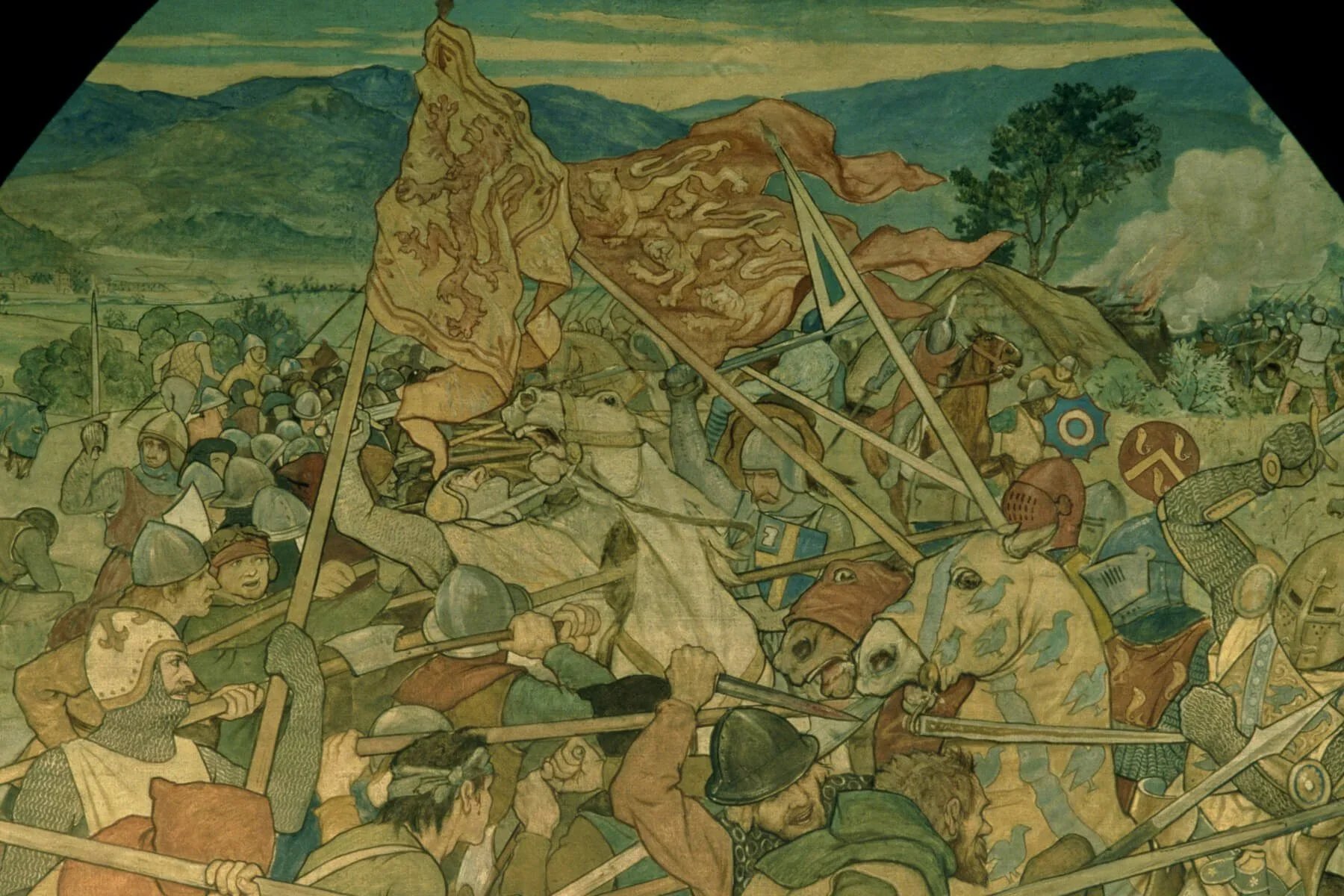
William Hole’s illustration of the Battle of Bannockburn
The Battle of Bannockburn Chess Set
The Battle of Bannockburn chess set is a powerful example of how craft and design can bring history to life. Each piece is carefully crafted to depict figures and elements of the battle, transforming a historic event into an interactive experience.
The Chess set was conceived 30 years ago and developed over two of those years, by Stirling 1314’s John Morgan and Scottish Historic Novelist, Nigel Tranter OBE, author of the epic Robert the Bruce Trilogy. The book that inspired the set!
All 32 different chess masterpieces were created by Scottish Artisan, Steve Trickett, who modelled every single chess piece under the stewardship of Nigel and another young Scot, Costume Historian Andrew Spratt, who illustrated in stunning detail, the complete costumes of every figure - Scottish and English.
As a result of that very special partnership, one of the world’s most formidable chess sets was created, creating the drama and urgency of Scotland’s most defining step in history - with every detail considered, from the textures of metal and cloth to the individual expressions, ensuring that each piece is distinct and meaningful. The result is not simply a chess set, but a collection of miniature sculptures, each telling of its own part in the greater story.
At the centre stand the kings: Robert the Bruce, composed and resolute, and Edward II, embodying a contrasting presence. Around them, key figures emerge, each contributing to the wider story. Sir William Wallace graces the board as a Scottish Knight. Although he was to die nine years before Bannockburn, in the Tower of London at the hands of Edward I, such as the effect he had on the Scottish Rising and a challenging example to the very young King Robert the Bruce, he earns his place in this epic piece of art.
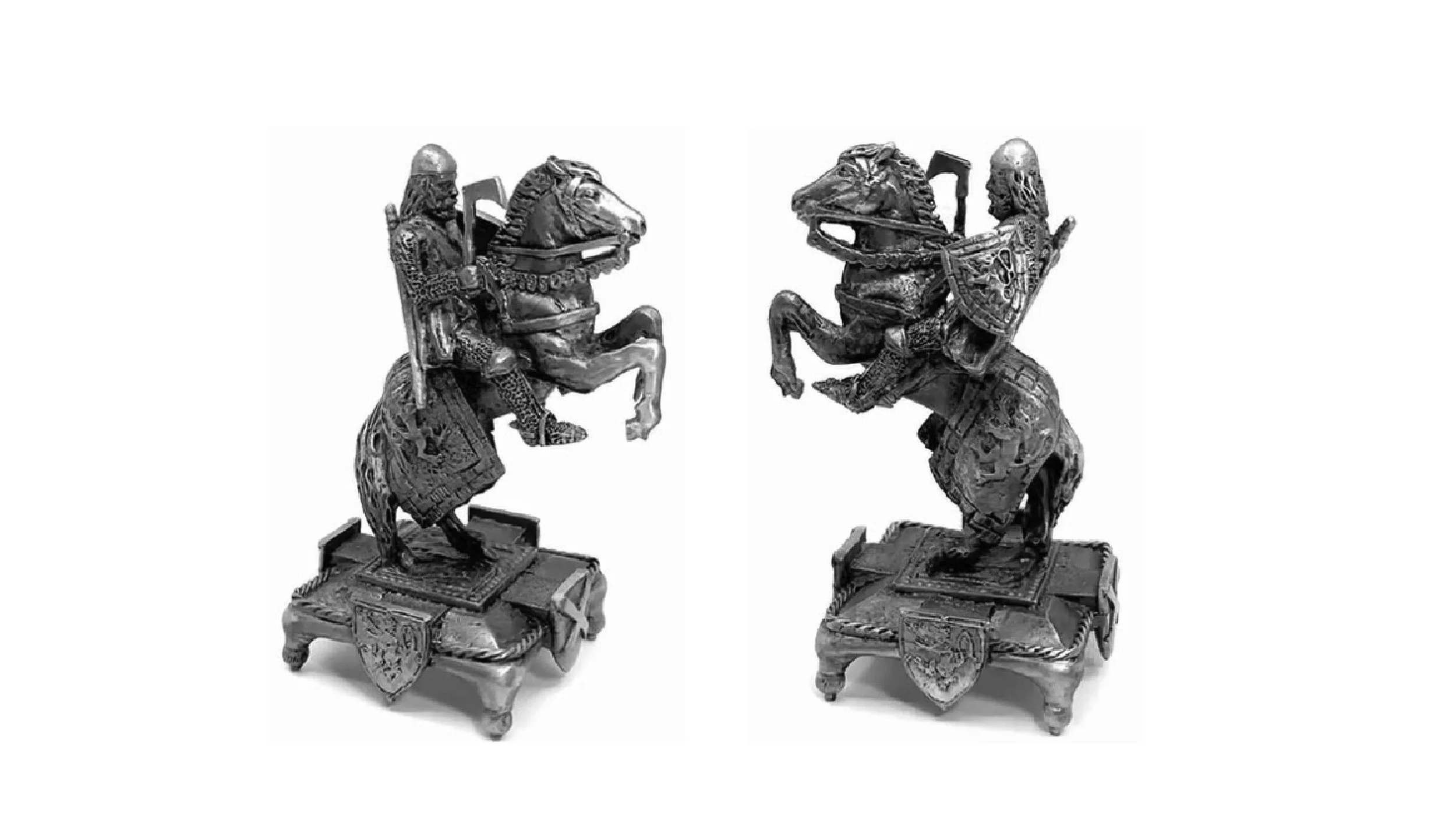
Scottish Knight, Sir William Wallace, died 9 years before Bannockburn, but his courage and influence in the pursuit of Scottish Freedom earn him his place in this epic Chess Set.
Craft as a keeper of history
Craft has always played a role in preserving culture. Long before digital archives, stories were passed down through objects, carefully made, deeply considered and built to last. In this way, craftsmanship becomes more than skill; it becomes a form of storytelling.
In a fast-paced, disposable world, such craft holds particular significance. It offers permanence, inviting us to slow down and engage with history more thoughtfully.
Engaging with history through play
Unlike traditional artefacts, a chess set invites interaction. It is not something to be observed from a distance, but something to be used, explored and experienced.
Through play, the story of Bannockburn becomes dynamic. Pieces move, strategies unfold, and the narrative shifts with every game. This engagement creates a deeper connection, turning history into something lived rather than learned.
In this way, the experience becomes both intellectual and emotional - a meeting point between past and present. And a meeting point between the generations, with many a family using its presence to create the next Master Chess Player.
A legacy that continues to evolve
The Battle of Bannockburn continues to endure because it is more than an event; it is a symbol of identity and meaning. Through craft and design, that symbol is given new form, allowing it to remain relevant in a changing world.
In the work of Stirling1314, this legacy finds expression through objects that are designed to last, pieces that honour the past while belonging firmly in the present. The story of Bannockburn lives on, not only in memory, but in the art of making itself.
