
A luxury chess set begins with an idea, but bringing that idea to life requires a combination of design, traditional techniques and skilled craftsmanship. For a set created around history and character, every piece has a role to play, from the smallest pawn to the most distinctive figure on the board.
At Stirling1314, traditional hand-cast pewter is used to create the pieces for our two luxury chess sets, the Robert Burns Chess Set and Battle of Bannockburn Chess Set, with a sense of substance and detail. The process transforms an initial design into a physical object, with each stage contributing to the character of the finished set.
From concept to chess piece: designing the figures
Before pewter is even cast, there is the question of what each piece should represent.
Designing a figurative chess set involves more than creating attractive shapes. Proportion, posture, clothing and distinguishing features all have to work together to make the subject recognisable while ensuring the piece remains functional on the board.
This is particularly important when the chess set is rooted in a specific story. Stirling1314’s Robert Burns Chess Set, for example, draws inspiration from one of Scotland’s most celebrated cultural figures, while the Battle of Bannockburn Chess Set uses the chessboard to represent a pivotal moment in Scottish history.
The design therefore has two jobs: it must work as a chess piece and communicate something about the story behind it.
Why pewter?
The choice of material plays an important role in how a chess piece looks and feels.
Pewter has long been valued for its versatility and its ability to capture intricate forms. For detailed figurative pieces, this makes it well suited to designs where facial features, clothing and other elements need to be clearly defined.
It also gives the finished pieces a satisfying weight in the hand. That physical quality is particularly fitting for luxury chess sets based on historical subjects, where the material itself contributes to the sense of permanence.
For Stirling1314, pewter provides the foundation for creating pieces that are designed to be examined as closely as they are played with.
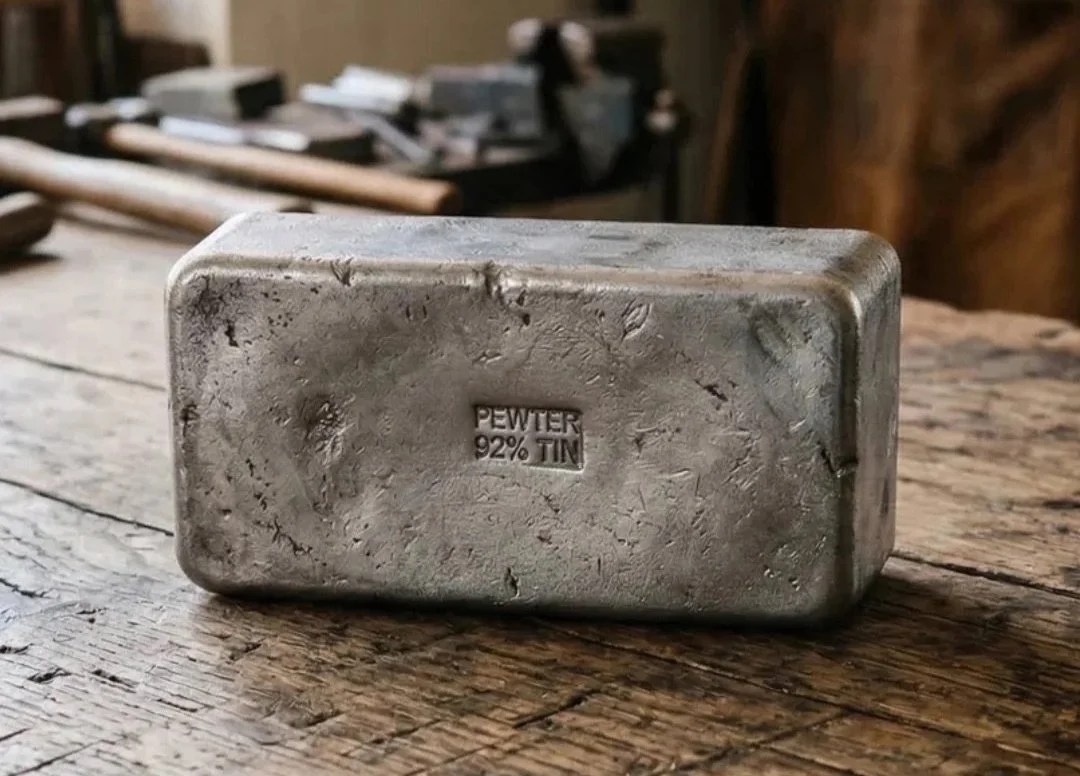
Hand-cast pewter brings weight, texture and fine detail to each chess piece
The process of hand-casting pewter
Hand-casting is where the design begins to take physical form.
Pewter is heated until it reaches a liquid state before being carefully introduced into a prepared mould. Once the metal cools and solidifies, the newly formed piece can be removed and prepared for the next stage.
The process demands care at every point. A mould must successfully capture the intended form, while the casting itself needs to produce a clear representation of the original design. With a complete luxury chess set containing numerous individual pieces, consistency is equally important.
Unlike a simple, uniform playing piece, a figurative design contains a range of shapes and details that need to translate successfully from the original concept into metal. The casting process is therefore an important part of preserving the character of each figure.
Hand-finishing: where the character emerges
Each piece is hand-finished to refine its appearance and bring greater definition to the final object. This stage allows individual elements of the design to be carefully considered, ensuring the finished figure reflects the original intention.
It is also where the differences between pieces become particularly apparent. A historical figure, character or symbolic subject needs to retain its own identity, rather than becoming lost within the uniformity of a mass-produced set.
The result is a collection of individual pieces that work together while retaining the details that make them distinctive.
Creating a complete luxury chess set
A luxury chess set has to function as a whole. Every piece needs to sit comfortably alongside the others in terms of scale, proportion and visual character. For a themed set, there is another consideration: the relationship between the pieces should help tell its story.
The Battle of Bannockburn Chess Set demonstrates this particularly well, using opposing sides of the chessboard to represent the forces involved in one of Scotland's most significant battles. The Robert Burns Chess Set, meanwhile, takes a very different subject and translates Burns' cultural legacy into a complete chess collection.
The craft behind the board
From the first design through to casting and hand-finishing, creating a luxury chess set is a process that depends on both precision and traditional skill.
At Stirling1314, hand-cast pewter provides the material for turning stories, characters and Scottish history into tangible pieces. The result is chess with a deeper connection to the subjects it represents, crafted to be appreciated on the board, on display and for years to come.
